IF YOUR PATCH WON'T STICK
Patch peeling off? Here's what changes.
Patches don't always stick, especially on moisturized skin. Applying to dry skin can help. Gel, spray and tablets are other options to ask about.
FINDING WHAT SUITS YOU
Each form has pros and cons
The NHS says finding the right fit can take some trying, with different brands and different forms. It suggests talking it through with a doctor first.
GEL AND SPRAY
Two once-a-day skin options
- The NHS says gel can take 5 minutes or more to dry
- The NHS describes UK spray: inner arm or inner thigh, dress after 2 minutes, wait 1 hour before a bath or shower
BEFORE YOU COMPARE
If you still have your womb
If you have not had a hysterectomy, the NHS says this gel must be used with a progestogen. It says the same for the spray.
TABLETS
A tablet, once a day
Tablets are usually taken once a day. The NHS says that may be the easiest way to have treatment.
ON CLOT RISK
What the NHS says on clot risk
The NHS says tablets carry a higher clot risk than patches, gel or spray. It notes the overall risk is still small. Ask your doctor what applies to you.
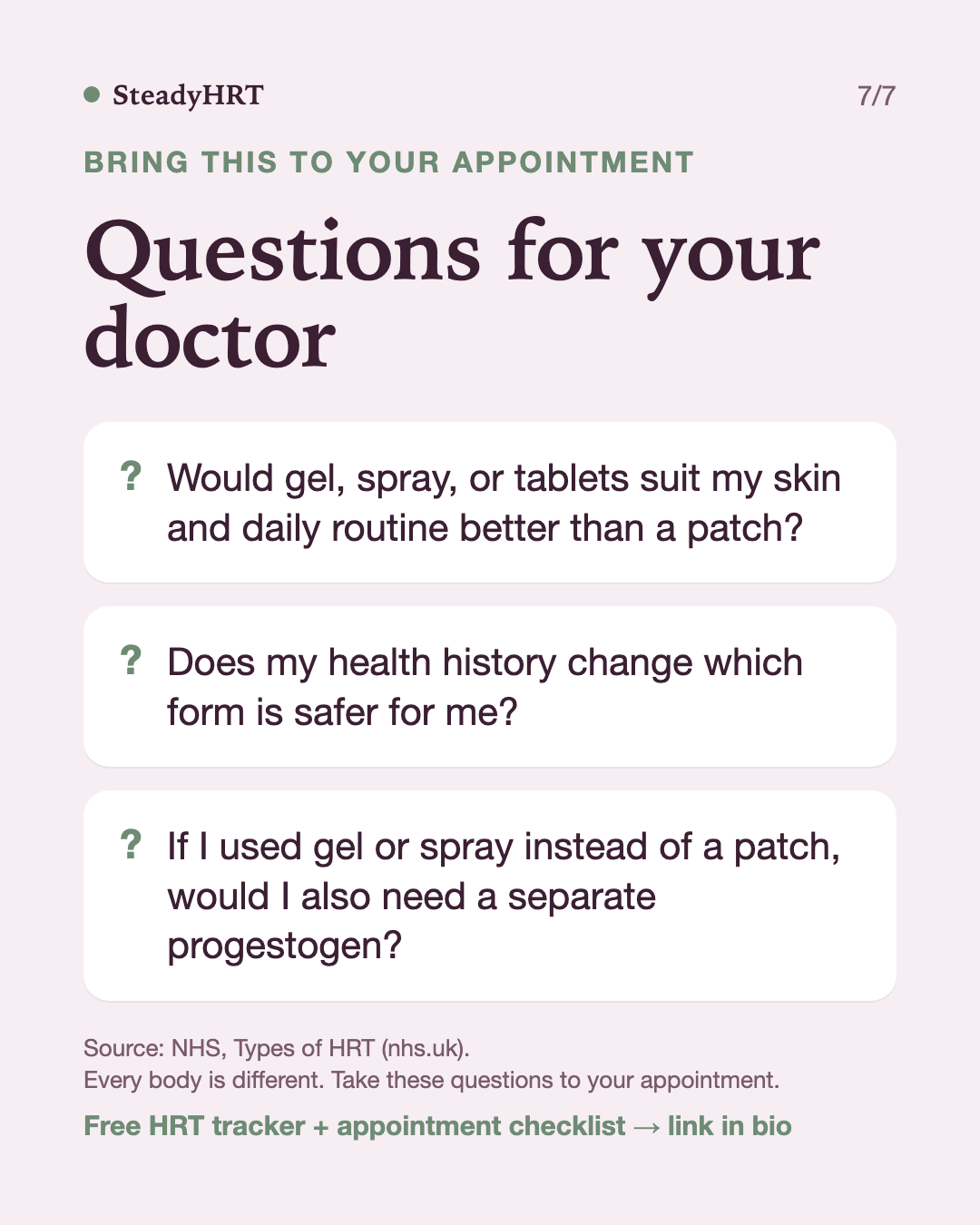
Bring this to your appointment
Questions for your doctor
- Would gel, spray, or tablets suit my skin and daily routine better than a patch?
- Does my health history change which form is safer for me?
- If I used gel or spray instead of a patch, would I also need a separate progestogen?
As slides


Sources
General information, not medical advice.